



 Home
For importers, the main question is not simply whether ocean or air freight is cheaper. It is whether the selected shipping method can meet the required delivery schedule, handle the cargo efficiently and provide a predictable total logistics cost.
Recent market updates published on November 3, 2026, show different developments across China–Europe transportation. Ocean freight volumes handled by Rhenus on the China–Europe corridor have increased, while air freight conditions vary significantly by Chinese departure city and destination airport.
November Market Brief: Three Things to Watch
- Ocean freight: Rhenus reported approximately 26% year-on-year growth in its China-to-Europe ocean freight volumes in 2026 to date.
- Air freight: Rates and available space vary by origin. Some Chinese gateways are experiencing tighter capacity and higher prices.
- Year-end planning: Importers should confirm cargo readiness, booking availability and destination delivery arrangements earlier rather than relying on estimated transit times alone.
1. What Is Happening in the China–Europe Freight Market?
China–Europe trade continues to create opportunities for international logistics providers. However, transportation conditions are not identical across every route.
In a market announcement published on November 3, logistics company Rhenus reported that its China-to-Europe ocean freight volumes had increased by around 26% year on year in 2026 to date. The company also reported growth in its air freight business, supported by new customer activity.
These figures reflect Rhenus's own business performance rather than the entire market. Nevertheless, they illustrate the continued importance of the China–Europe trade corridor.
At the same time, air freight demand, capacity allocation and trade policy developments can create different conditions between individual routes. Importers should therefore compare actual shipping options instead of assuming that every Chinese departure city offers the same rates or schedules.
Source: Rhenus – China–Europe Freight Business Update, November 3, 2026.
2. Ocean Freight vs. Air Freight: Which Should You Choose?
Choosing between ocean and air freight depends on the shipment's size, urgency, product characteristics and budget. Both methods have advantages, but they serve different business needs.
Ocean Freight: Better for Larger Shipments
Ocean freight is commonly used for furniture, machinery, building materials, household products, industrial supplies and other commercial cargo shipped in larger quantities.
For businesses with regular purchasing schedules, sea transportation can help reduce the transportation cost per unit. It is particularly worth considering when the delivery deadline allows enough time for port handling, customs clearance and destination transportation.
Before booking, importers should confirm:
- Whether the shipment requires FCL or LCL transportation.
- Which Chinese departure port is suitable for the supplier's location.
- The planned vessel departure and estimated arrival date.
- Whether destination customs clearance and final delivery are included.
- Whether additional charges may apply at the destination port.
Air Freight: Better for Urgent or High-Value Cargo
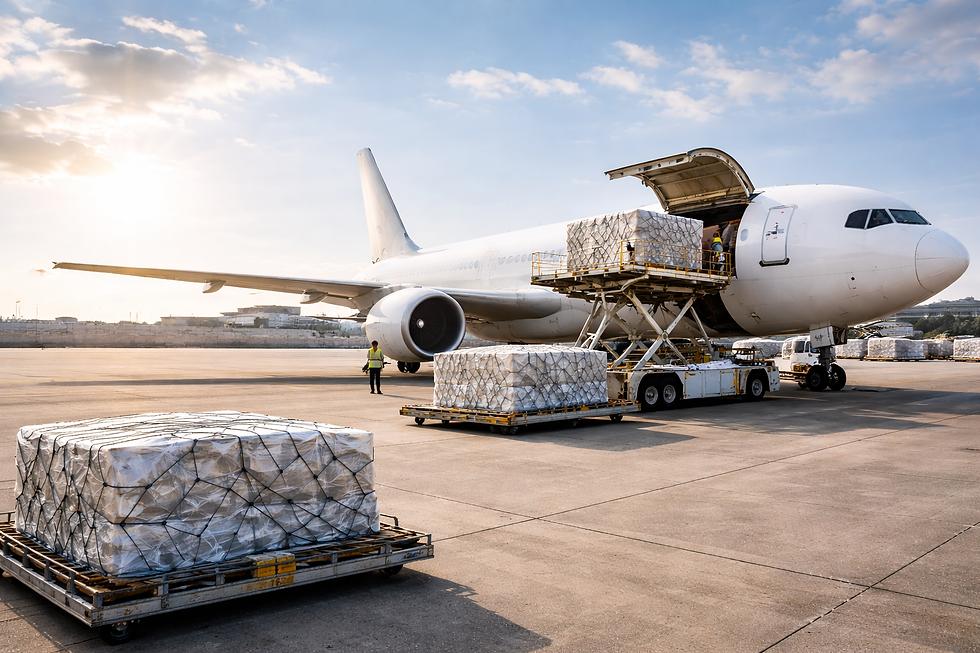
Air freight is a practical alternative for samples, electronic components, urgent spare parts, fashion products and inventory that needs to be replenished quickly.
However, air cargo capacity can change from one airport to another. Zencargo's November 3 market update reported tighter space and rising rates on several China–Europe air freight routes. It also highlighted differences between departure cities and airline services.
For example, some services may offer lower rates with longer transit times, while earlier departures may require advance booking. This makes it important to compare the actual flight arrangement rather than selecting a service based only on its quoted price.
Source: Zencargo Market Update – November 3, 2026.
3. A Quick Comparison for Importers
| Factor | Ocean Freight | Air Freight |
|---|---|---|
| Suitable cargo | Bulk goods, machinery, furniture and regular inventory | Samples, urgent goods and high-value products |
| Cost structure | Often more economical for larger volumes | Usually higher transportation cost per kilogram |
| Capacity considerations | Container space, vessel schedules and port operations | Flight space, airline allocation and cargo restrictions |
| Planning priority | Book according to production and inventory schedules | Confirm space and flight dates before cargo dispatch |
| Best approach | Plan ahead for non-urgent bulk shipments | Prioritize urgent cargo and time-sensitive replenishment |
4. Questions Importers Frequently Ask
Q1: Should I book my China–Europe shipment earlier in November?
Early booking is a sensible approach, especially for shipments with fixed delivery deadlines. It gives your logistics provider more time to check available services, arrange cargo collection and coordinate export procedures. For air freight, advance confirmation is particularly useful when space is limited on the preferred route.
Q2: Can I ship goods from different suppliers together?
Yes. If several suppliers are located in China, a freight forwarder may be able to arrange collection or receive the goods at a warehouse, check the cargo information and consolidate suitable shipments before international transportation.
Consolidation can make shipment management easier, but the final cost depends on the cargo's total weight, volume, packaging and applicable handling charges.
Q3: What information is needed for a shipping quotation?
To receive a more accurate quotation, prepare the following information:
- Product name and a brief cargo description.
- Whether the products are branded or unbranded.
- Number of cartons or packages.
- Gross weight and carton dimensions.
- Product material and any batteries, liquids or magnets.
- Supplier location and cargo-ready date.
- Final delivery address in Europe.
Photos and a packing list are also helpful, particularly for products that may require additional shipping checks.
Q4: Does the quoted freight rate include delivery to my warehouse?
Not necessarily. Some services are port-to-port or airport-to-airport, while others may include customs clearance and final delivery. Always confirm the scope of the quotation, destination charges and any additional handling requirements before arranging the shipment.
5. A Practical Checklist Before Shipping from China
Before confirming an international shipment, importers can use this checklist to avoid common communication and scheduling problems.
- Confirm that the supplier has completed production and packaging.
- Check the actual cargo weight and dimensions.
- Confirm whether the goods contain restricted or sensitive components.
- Compare available air and ocean freight options.
- Confirm the origin warehouse or factory pickup arrangements.
- Check the destination customs clearance and delivery arrangements.
- Keep sufficient time for possible schedule changes.
One important point: the estimated transportation time should not be confused with the complete door-to-door delivery time. Warehouse receiving, export handling, customs clearance and final delivery can all affect the actual arrival date.
6. Make Your China–Europe Shipping Plan More Efficient
The China–Europe logistics market continues to develop, but different transportation methods and departure locations can experience very different conditions. Ocean freight may suit larger shipments, while air freight can help businesses respond to urgent inventory requirements.
For importers, the most effective approach is to prepare accurate cargo information, compare complete logistics costs and confirm transportation arrangements before the goods are ready to leave the supplier.
Whether you are shipping commercial products, machinery, spare parts or general cargo, working with an experienced freight forwarder can make supplier coordination and international transportation easier to manage.
Looking for a Freight Forwarder in China?
Goodship56 provides international logistics support for businesses sourcing and shipping products from China. Share your cargo details, supplier location and destination address with our team to check suitable shipping options.
Contact us: Goodship56 Contact Page
WhatsApp: Chat with our logistics team

 Good
 Nov 03 2026


 Email:
 Address: 216, Building A1, Fuhai Industrial Zone, Fuyong Community, Fuyong Street, Baoan District, Shenzhen, China